
Borax injection system,
Hengyang, China
Commissioning-only scope on a system that coats the inside of seamless steel tube at around 1,000 degrees. Two dosing skids, one shared injection lance, and a control system that had to hand over cleanly to the mill.
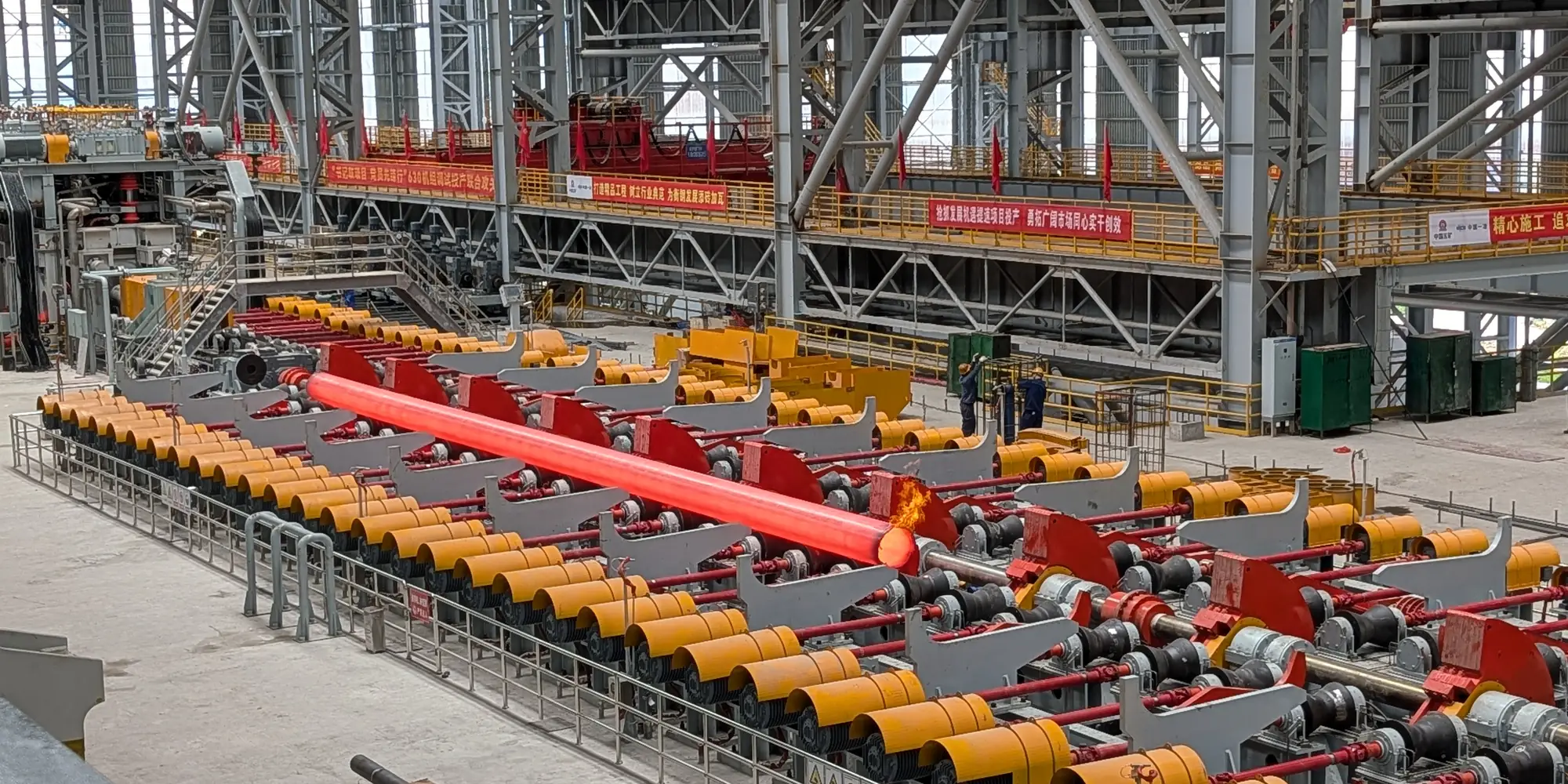
Commissioning a coating system inside a 1,000 degree tube mill
Pac Technologies was engaged for commissioning only. The plant and its control system were supplied by the equipment vendor; our job was to bring the system into working order on site, prove it against the mill's process, and hand it over.
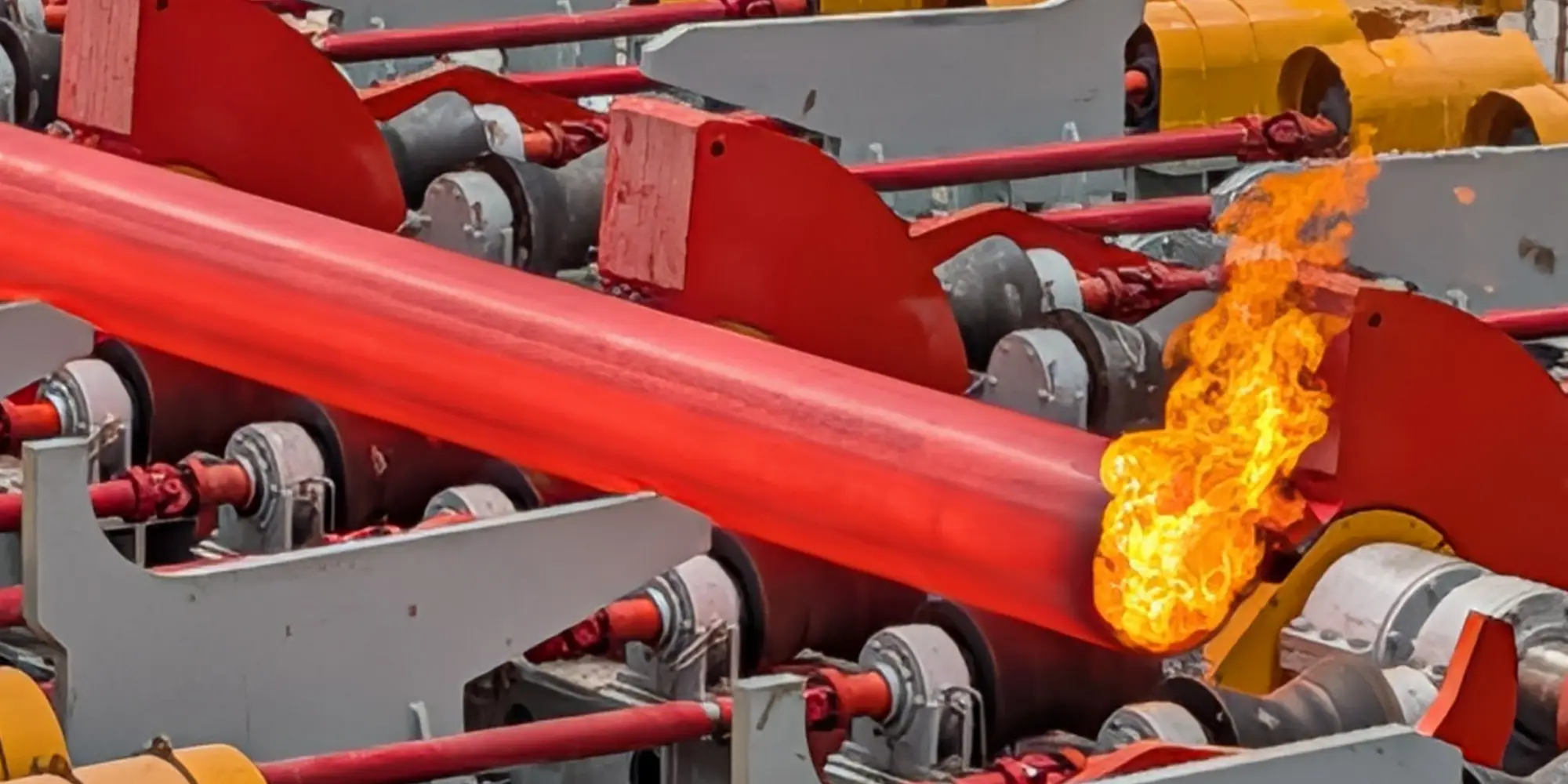
The system injects borax powder into the bore of seamless steel tube while the tube is still around 1,000 degrees. The powder fuses on contact into a glass-like film that protects the inside surface through the remaining hot-rolling passes. Get the coating wrong and the defect is invisible until much later in the process.
- Industry
- Steel — seamless tube
- Service
- Commissioning only
- Location
- Hengyang, Hunan, China
- Year
- 2026
- Control platform
- Siemens S7-1200 with 12-inch Comfort panel
- Master control
- PROFINET coupler to the mill's plant-wide system
Coating the whole tube, not just the far end
The tube is ten metres long and the powder gets one shot to reach all of it. Borax is fluidised in a pressure vessel, carried down a single line, and thrown into the bore from a lance at one end. How far it travels before it lands comes down to the ratio between its axial speed and its radial speed — and both are driven by the same vessel pressure. Push harder and you get more material and more throw at the same time.
Left alone, that physics has one outcome: the far half of the tube gets coated and the near end stays bare. Uniform coverage is not the default state of the machine. It has to be engineered against, inside a single injection lasting a few seconds.
On arrival the plant was running with only one of the lance's two gas rings in service — precisely the condition that produces the back-heavy result the mill was seeing. Two dosing skids share the one injection line and the one lance, so any recipe change has to hold for both or alternate tubes come out differently. Ten tube sizes run through the mill, and each needs its own tuned recipe.
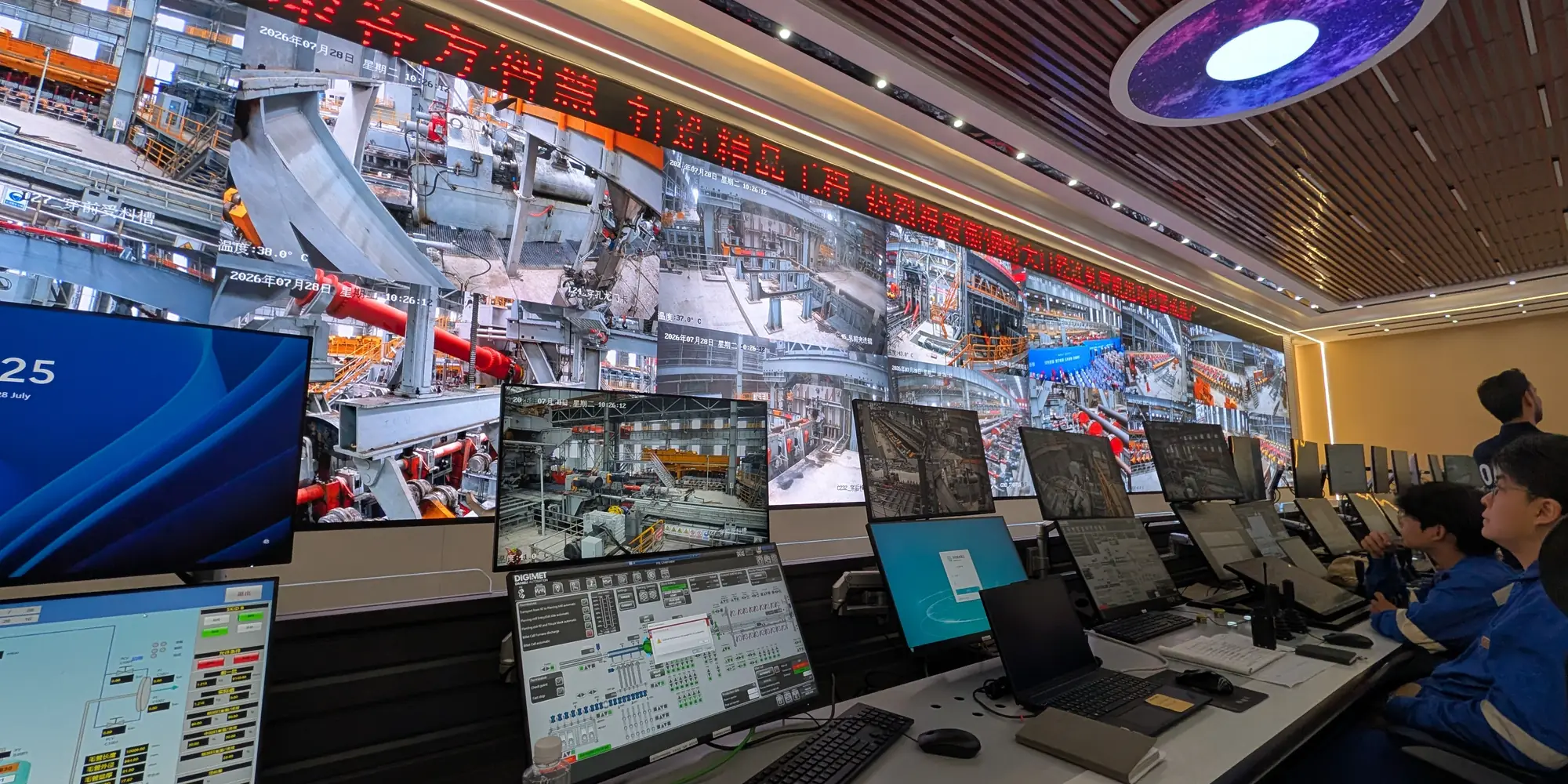
Make the control system trustworthy, then tune the shot
Tuning a process against instrument readings only works if the readings are true. Before touching a single setpoint, we reviewed the delivered control code against the machine as it was actually built and piped, and worked a register of findings through with the equipment vendor so the corrections would survive their next software release.
The most consequential finding was a scaling mismatch. Every pressure control valve on the plant accepted a wider range than the control system had been scaled for, which meant that for the entire history of the project each valve had been delivering more pressure than it was commanded. It surfaced by checking valve data plates against the control scaling on site, and it reframed every pressure number previously recorded. We corrected the scaling and translated the recipe set in the same window, so machine behaviour stayed put while the numbers became honest.
Alongside it: batch weight reporting was reading high, so operators could not trust what the panel said had been delivered. A skid interlock held on the local panel but not when commanded from the plant control system, allowing both skids to be enabled at once. Two protective timeouts were wired to the wrong sequence steps and had never been able to fire.
With the instrumentation honest, the injection itself. The lance carries two concentric gas rings — an inner set of near-axial jets that throws material to the far end, and an outer set of tangential jets that puts it down nearer the lance and wraps it around the bore. They fire in sequence, never together. Bringing the second ring into service meant shortening the first ring's window: the timing chain has to leave room for it, and at exactly equal the second ring silently never fires. With both rings sequenced, the deposition point walks back to front through the shot instead of dumping everything at the far end.
- Dosing
- Two skids, loss-in-weight feeders to pressure vessels
- Injection
- Single two-stage lance, shared between skids
- Inner ring
- Near-axial jets — throw to the far end
- Outer ring
- Tangential jets — near coverage and swirl
- Sequencing
- Rings fire in sequence, not together
- Recipes
- Per tube size, matched across both skids
Both rings firing, and numbers the operators can trust
The plant went from single-ring injection, which can only ever coat the back half of the tube, to a sequenced two-stage shot that sweeps the deposition point front to back. The corrections underneath it matter as much: a commissioning team tuning against wrong numbers will tune the machine to the wrong place and leave it there.
- Two-stage injection brought into service — both lance rings sequenced inside the shot window, replacing single-ring operation.
- Pressure scaling corrected across every control valve on both skids, with the recipe set translated in the same change so behaviour was unchanged and the recorded numbers became real.
- Batch weight reporting corrected, so the panel reports what was actually delivered.
- Skid interlock restored on the remote path — the two skids can no longer be enabled together from the plant control system.
- Protective timeouts reinstated on the fill and transport steps.
- Findings fed back to the equipment vendor, so the fixes are carried into their standard product rather than reverted by the next release.
- Commissioning record and per-size recipes handed to the mill's engineering team.
More projects
All projects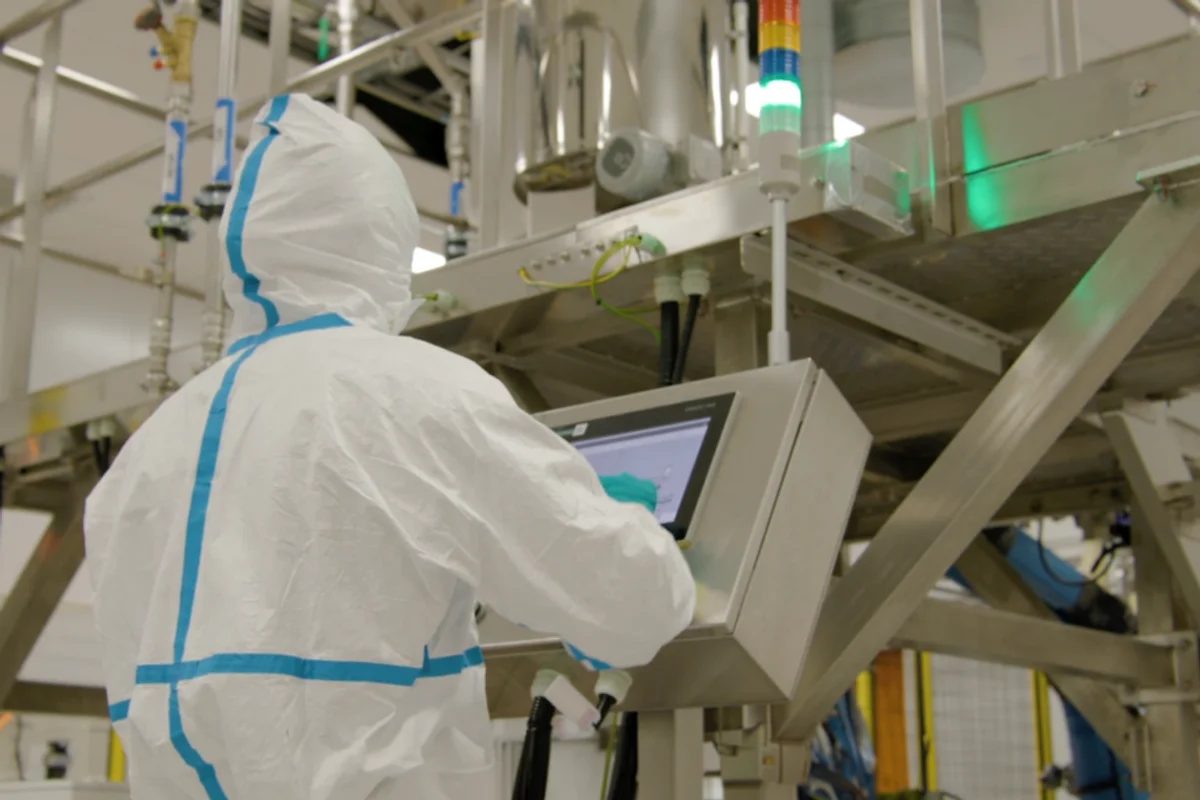
Powder-handling plant, Mo i Rana
Hybrid commissioning of a battery precursor plant, delivered inside a seven-day shutdown.
Read case study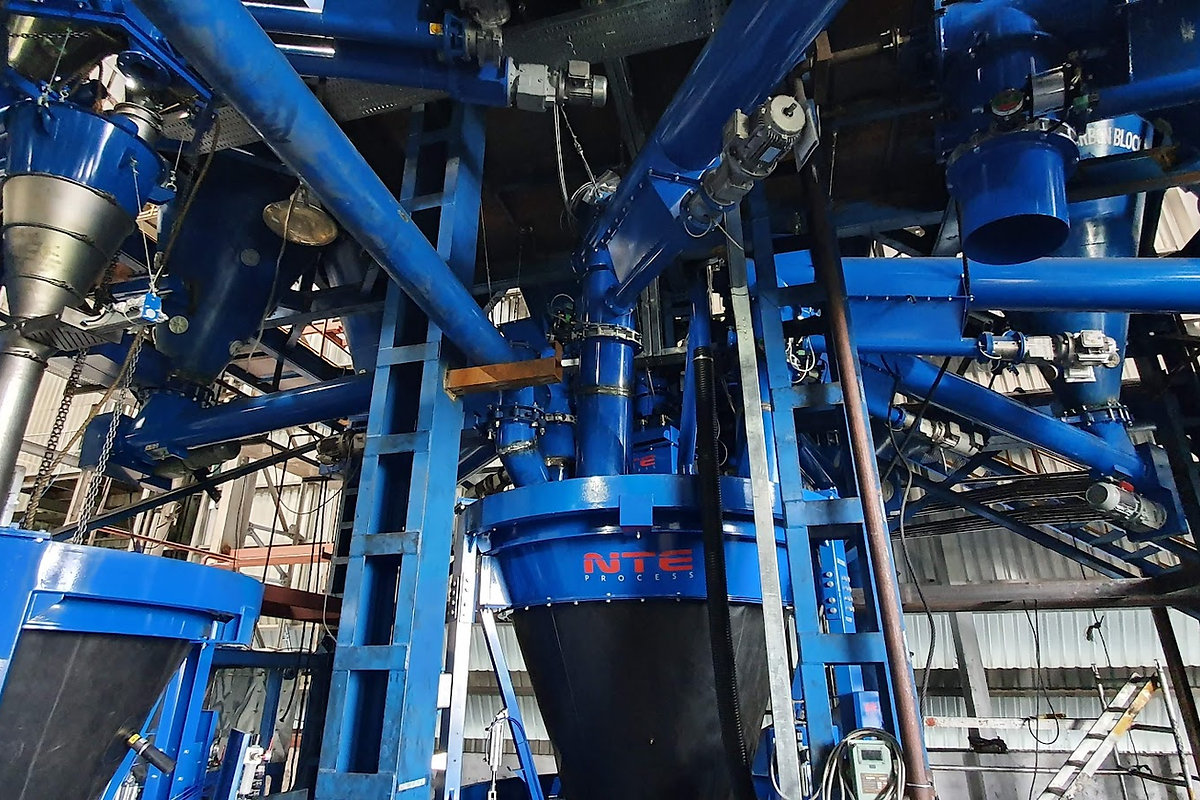
Rubber dosing automation, Chennai
Gravimetric compound dosing on ControlLogix, replacing manual weighing.
Read case study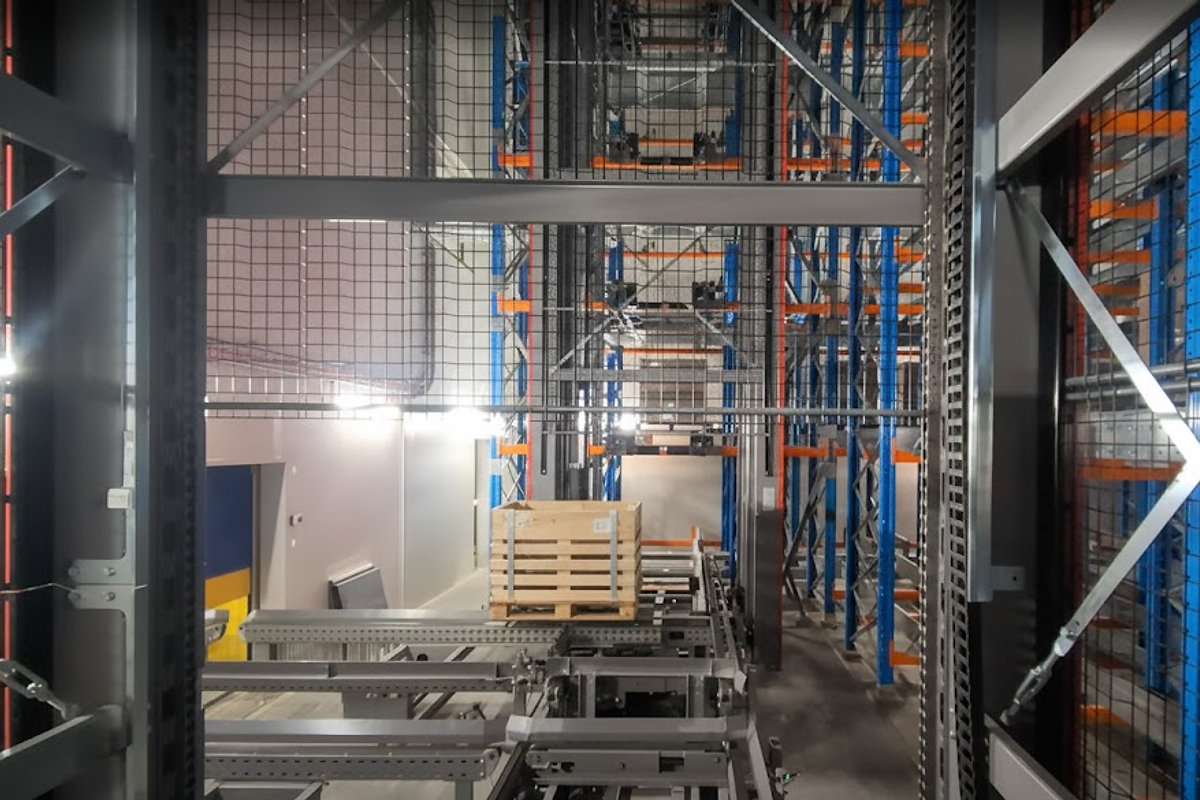
Automated pallet freezer, Cootamundra
Nine-level storage and retrieval at minus 27 degrees, with dual-elevator redundancy.
Read case studyCommissioning someone
else's plant?
Tell us the process, the platform and what it is doing wrong on site. We come back with an approach, not a brochure.